How to Monitor Your Respiratory Rate at Home With a Camera App
Learn how to monitor your respiratory rate at home with a camera app using rPPG technology, why breathing rate matters, and what the research says about accuracy.
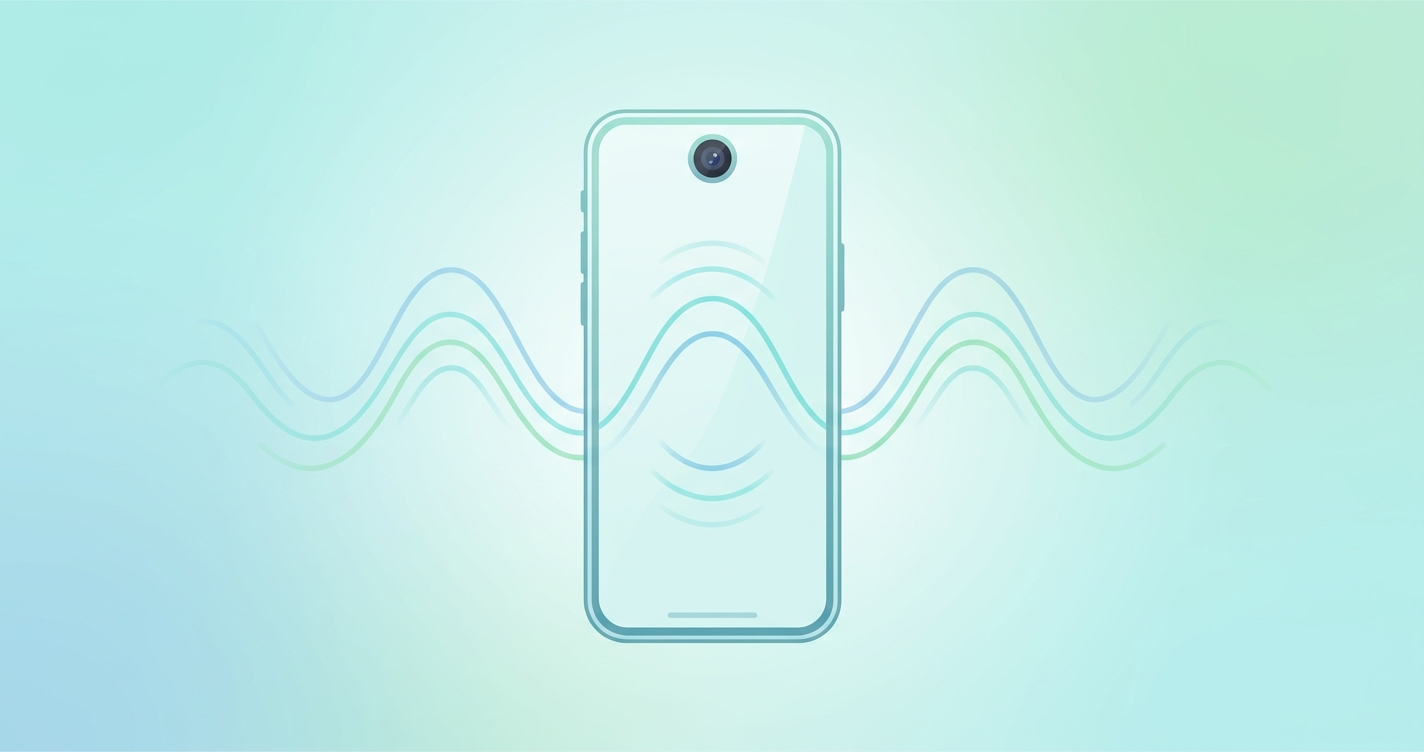
Respiratory rate is the vital sign that doctors care about most and patients think about least. While most people can tell you their resting heart rate or blood pressure range, almost nobody tracks how many breaths they take per minute. That gap matters more than you'd expect. The ability to monitor your respiratory rate at home with a camera app is changing how people catch health problems early, before they escalate into emergency room visits.
"Respiratory rate is the most sensitive marker of patient deterioration and often changes before any other vital sign." -- Cretikos et al., Resuscitation, 2008
Why respiratory rate deserves more attention
The American Lung Association calls respiratory rate one of your core vital signs, alongside heart rate, blood pressure, temperature, and oxygen saturation. A healthy adult at rest breathes somewhere between 12 and 20 times per minute. Consistently landing outside that range can signal problems ranging from anxiety and metabolic disorders to COPD exacerbations and heart failure.
A study published in Resuscitation by Cretikos and colleagues found that a respiratory rate above 24 breaths per minute was the single strongest predictor of cardiac arrest within 24 hours in hospitalized patients. The problem? In clinical settings, nurses frequently estimate respiratory rate rather than counting it. A 2024 survey published in the British Journal of Nursing found that nurses across multiple countries underestimated the importance of capturing an accurate respiratory rate for every patient.
At home, the situation is worse. People own blood pressure cuffs and pulse oximeters. Almost nobody owns a device that measures breathing rate. That's where camera-based measurement comes in.
How camera apps actually measure breathing rate
The technology behind camera-based respiratory rate monitoring is called remote photoplethysmography, or rPPG. Here's what actually happens during a scan:
Your phone's front-facing camera records a short video of your face. Beneath the skin, blood pulses through capillaries with each heartbeat, causing tiny changes in how your skin reflects light. These changes are invisible to the naked eye, but a camera sensor can pick them up. Software extracts the cardiac pulse waveform from that signal. So far, this is the same process used for camera-based heart rate measurement.
Respiratory rate extraction adds another layer. When you breathe, two things happen to the pulse signal. First, your chest and shoulder movements create subtle motion artifacts in the video. Second, a phenomenon called respiratory sinus arrhythmia (RSA) causes your heart rate to speed up slightly when you inhale and slow down when you exhale. By analyzing both the motion component and the RSA modulation of the pulse waveform, the algorithm estimates how many breaths you're taking per minute.
Philips developed some of the earliest commercial rPPG biosensing technology and holds patents covering simultaneous pulse and breathing rate extraction from standard video cameras. Their approach works even when the subject isn't sitting perfectly still, which matters for real-world home use.
Comparing respiratory rate measurement methods
| Method | Equipment needed | Cost | Measures continuously? | Accuracy range | Best for |
|---|---|---|---|---|---|
| Manual counting | Watch or timer | Free | No | Depends on observer | Clinical spot checks |
| Chest strap (e.g., Garmin HRM-Pro) | Dedicated strap | $80-130 | Yes, during activity | Within 1-2 breaths/min | Athletes, sleep tracking |
| Pulse oximeter with RR | Finger clip device | $30-80 | While wearing | Within 2-3 breaths/min | COPD monitoring |
| Smartwatch (Apple Watch, Fitbit) | Wrist wearable | $200-500 | During sleep only | Within 1-3 breaths/min | Overnight trends |
| Camera app (rPPG) | Smartphone only | Free or low-cost | During 30-60s scan | Within 1-3 breaths/min | Daily spot checks, no equipment |
| Capnography | Medical CO2 monitor | $2,000+ | Yes | Gold standard | ICU, anesthesia |
The camera app approach stands out for one reason: you already own the equipment. There's nothing to charge, nothing to strap on, nothing to remember to bring with you.
What the research says about accuracy
Yonghun Nam and colleagues at the University of Connecticut demonstrated in 2014 that both heart rate and respiratory rate could be accurately derived from video signals captured by smartphone and tablet cameras. Their work, published in Annals of Biomedical Engineering, showed that the pulsatile signal from a built-in camera contained enough information to extract breathing rate without any additional sensors.
More recently, a 2025 study by Asdo and colleagues conducted in Uganda tested smartphone-based respiratory rate measurement in a clinical setting. They reported interrater reliability of 0.95, which qualifies as very high repeatability. The bias between measurements was just 0.24 breaths per minute, and 98.9% of measurements completed in under 15 seconds. That level of performance is hard to argue with for a tool that requires zero equipment.
A systematic review by Srestha and Kim, published in Physiological Measurement in September 2025, examined contactless respiratory rate measurement using RGB cameras across multiple studies. Their findings confirmed that camera-based approaches produce clinically meaningful respiratory rate estimates, though accuracy varies with lighting conditions, subject movement, and skin tone.
The WellFie application, evaluated in a study posted to medRxiv in 2023, used built-in rPPG technology to measure heart rate, respiratory rate, and blood pressure from a smartphone camera. The results showed that camera-based respiratory rate measurement performed comparably to traditional contact-based PPG devices.
When home respiratory rate monitoring matters most
Chronic lung conditions
People living with COPD or asthma experience breathing rate changes before they notice worsening symptoms. A gradual increase in resting respiratory rate over several days can signal an oncoming exacerbation. Catching that trend early, before shortness of breath becomes severe, gives people time to adjust medications or contact their physician. The Importance of Respiratory Rate Monitoring review published in Sensors (Nicolò et al., 2020) confirmed that resting respiratory rate predicts COPD exacerbations with high sensitivity.
Post-surgical recovery
After surgery, particularly chest or abdominal procedures, respiratory rate monitoring at home fills a gap in follow-up care. Hospitals discharge patients with instructions to watch for warning signs, but rarely provide tools to quantify breathing changes. A camera app gives recovering patients an objective measurement instead of a subjective guess.
Sleep and stress tracking
Your breathing rate drops during deep sleep and rises during stress. Tracking respiratory rate over time reveals patterns that correlate with sleep quality, anxiety levels, and overall autonomic nervous system health. The Sleep Foundation notes that changes in sleep respiratory rate can be early indicators of sleep apnea, a condition that affects an estimated 30 million Americans, many of whom remain undiagnosed.
Fitness and athletic recovery
Athletes track respiratory rate to gauge recovery status. An elevated resting breathing rate the morning after hard training suggests the body hasn't fully recovered. Coaches and sports physiologists have used this metric for years, but it's been limited to athletes with access to chest straps or lab equipment. Camera apps make the same insight available to recreational exercisers.
Current research and evidence
The science of camera-based respiratory monitoring builds on over a decade of rPPG research. Verkruysse, Svaasand, and Nelson published the foundational rPPG paper in Optics Express in 2008, proving that ambient light and a standard camera could detect physiological signals from skin. Since then, researchers have expanded the technique from heart rate alone to a full suite of vital signs.
Daniel McDuff, now at Google Research and formerly at Microsoft Research and MIT Media Lab, has published extensively on camera-based physiological measurement. His work with colleagues including Nishidate and Nakano, published in IEEE Transactions on Biomedical Engineering, explored population-scale contactless physiological measurement using mobile device cameras.
The University of Connecticut's Biomedical Signal Processing Lab, led by Ki Chon, produced early smartphone-specific respiratory rate research. Their 2014 paper remains one of the most cited works on mobile camera-based breathing measurement.
Peter Charlton and colleagues at King's College London published research in 2018 on extracting respiratory rate from the pulse waveform, providing algorithmic foundations that many camera-based apps now build upon.
The future of home respiratory monitoring
Respiratory rate has been the hardest vital sign to measure outside a clinical setting. Heart rate has wrist sensors. Blood pressure has home cuffs. Temperature has thermometers. Breathing rate had nothing practical until camera-based measurement arrived.
The trajectory points toward respiratory rate becoming a standard part of daily health check-ins. As smartphone cameras improve in resolution and frame rate, and as machine learning models get trained on larger datasets, the accuracy of camera-based respiratory measurement will keep tightening. Integration with electronic health records through FHIR standards means that home respiratory rate measurements could eventually flow directly to a patient's care team.
For people managing chronic conditions, this matters. A physician who can see two weeks of daily respiratory rate trends has far more diagnostic information than one who gets a single spot-check during an office visit.
Frequently asked questions
How accurate are camera apps for measuring respiratory rate?
Recent studies show camera-based respiratory rate measurement achieves accuracy within 1 to 3 breaths per minute of gold-standard clinical methods. A 2025 study in Uganda reported bias of just 0.24 breaths per minute with 0.95 interrater reliability. Accuracy depends on lighting, staying relatively still during the scan, and following the app's positioning instructions.
How long does a respiratory rate scan take?
Most camera-based health apps complete a respiratory rate measurement in 30 to 60 seconds. The 2025 Uganda study found that 98.9% of measurements finished in under 15 seconds, though longer scans generally produce more stable readings.
Can I measure respiratory rate while sleeping with a camera app?
Current smartphone camera apps require you to face the camera during a scan, so they work best as active spot-checks rather than passive overnight monitors. Some dedicated devices and certain smartwatches offer continuous sleep respiratory tracking, but phone-based rPPG is designed for brief, intentional measurements.
Is respiratory rate measurement with a phone camera safe?
Yes. Camera-based measurement is completely passive. The phone camera records reflected ambient light from your skin. No radiation, no contact, no sensors touching your body. It's the same process as taking a selfie video, with software analyzing the footage for physiological signals.
Camera-based respiratory rate monitoring is part of a broader shift toward accessible, equipment-free health measurement. Platforms like Circadify are building this capability into smartphone apps, making it possible to track breathing rate alongside heart rate, HRV, and other vital signs from a single face scan. If you've been curious about your breathing patterns, the barrier to checking just dropped to zero.
Related reading: What Is rPPG? How Your Phone Reads Vital Signs Explained | 5 Vital Signs You Can Measure With Just Your Phone Camera