Why Contactless Screening Is the Future of Health Checks
Contactless screening is replacing traditional health checks with phone-based vital sign measurement. Here's why the shift is happening and what it means.
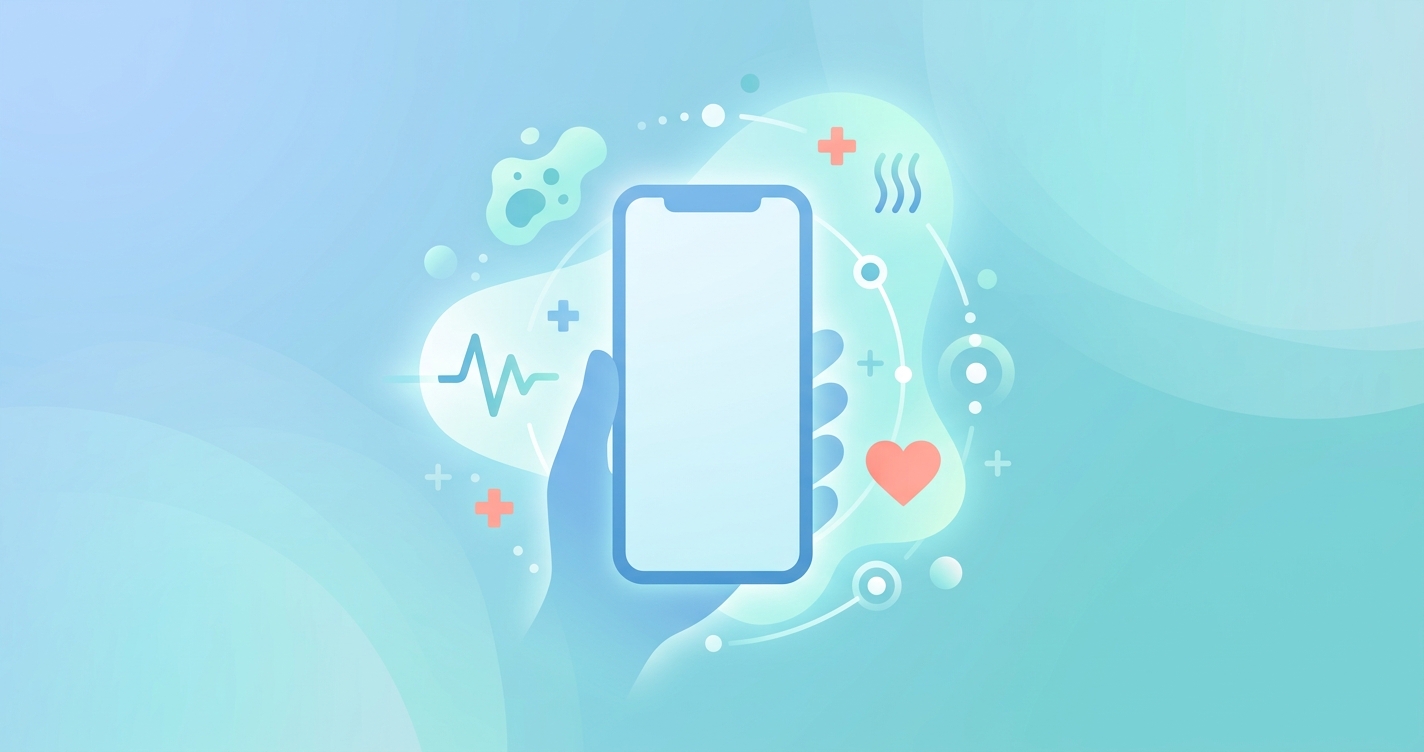
The conventional health check hasn't changed much in decades. You schedule an appointment weeks out, sit in a waiting room, get your blood pressure taken with an inflatable cuff, a clip on your finger for oxygen saturation, maybe an ECG if the doctor orders one. The whole process takes half a day when you include travel and waiting. Contactless screening is the future of health checks because it collapses that entire ritual into a 30-second phone scan you can do from your couch. That's not a marginal improvement. It's a different category of thing.
"Remote photoplethysmography enables the extraction of cardiovascular signals from facial video captured by ordinary cameras, fundamentally changing where and how often physiological measurement can occur." -- Verkruysse, Svaasand & Nelson, Optics Express, 2008
How contactless screening actually works
The underlying technology is remote photoplethysmography, or rPPG. When your heart pumps blood, the volume of blood in your facial capillaries changes slightly with each beat. Those volume changes alter how your skin absorbs and reflects light. The differences are invisible to the human eye, but a smartphone camera running at 30 frames per second picks them up.
Early rPPG research by Poh, McDuff, and Picard at MIT (2010) demonstrated that independent component analysis could separate the cardiac pulse signal from video noise. Since then, the field has moved to deep learning. Chen and McDuff presented neural network architectures at NeurIPS in 2018 that improved robustness across different skin tones and lighting conditions. A 2025 review in Frontiers in Digital Health by Di Lernia and colleagues at the University of Milan confirmed that rPPG can reliably extract heart rate, respiratory rate, heart rate variability, and blood oxygen estimates from standard webcam and smartphone video.
What you get from a single scan: heart rate, respiratory rate, blood oxygen saturation, stress level (via HRV analysis), and in some implementations, blood pressure estimates. That covers most of what a basic annual physical checks.
Traditional vs. contactless health screening
| Factor | Traditional health check | Contactless phone screening |
|---|---|---|
| Time to complete | 30-90 minutes (including wait) | 30-60 seconds |
| Equipment required | Blood pressure cuff, pulse oximeter, stethoscope | Smartphone camera |
| Location | Clinic or hospital | Anywhere |
| Cost per screening | $50-300+ (office visit copay/fee) | Free or low-cost app |
| Scheduling required | Yes, often weeks ahead | No, on-demand |
| Measurement frequency | 1-2 times per year | Daily if desired |
| Physical contact | Yes, multiple devices | None |
| White coat effect on readings | Documented in 15-30% of patients (Pioli et al., Hypertension, 2018) | Measured at home, reduced anxiety bias |
| Data continuity | Isolated snapshots | Longitudinal trends over time |
| Accessibility for rural populations | Limited by provider availability | Available wherever phones exist |
The numbers on that last row matter more than they might seem. The Health Resources and Services Administration estimates that over 80 million Americans live in Health Professional Shortage Areas. For those people, a "routine" health check is anything but routine.
Why the shift is happening now
Three things converged. First, smartphone cameras got good enough. The front-facing cameras on phones sold since 2022 have sufficient resolution and frame rate for rPPG signal extraction. Second, the algorithms caught up. Deep learning models trained on diverse datasets now handle varied lighting, skin tones, and movement artifacts that would have broken earlier approaches. Third, and maybe most importantly, COVID-19 permanently changed attitudes about in-person healthcare encounters.
A 2023 study on medRxiv evaluating the WellFie rPPG application found that smartphone-based vital sign measurement provided clinically acceptable readings for heart rate and blood oxygen in controlled conditions. The researchers noted that the "contactless video-based remote solution could be used on any modern smartphone," though they cautioned that more validation across diverse populations is still needed.
The market is responding. Data Insights Market projected the contactless health monitors market at $5.2 billion in 2025, growing at a compound annual rate above 12% through 2034. Fortune Business Insights valued the broader telehealth market at over $180 billion globally in 2025, with remote monitoring devices as one of the fastest-growing segments.
What's driving adoption across different groups
Individuals managing chronic conditions. About 60% of American adults have at least one chronic condition, according to the CDC. For someone with hypertension or COPD, daily vital sign tracking isn't optional but adherence to home monitoring is notoriously low. Ware and colleagues found in Telemedicine and e-Health (2019) that inconvenience and device complexity were the top barriers. A phone scan removes both.
Employers running wellness programs. Corporate biometric screening events are expensive and logistically painful. Flying nurses to dozens of office locations, coordinating schedules, handling HIPAA compliance for onsite events. Phone-based screening lets employees complete their health checks from home on their own time.
Healthcare systems watching readmission rates. CMS reported 30-day readmission rates hovering around 14% nationally in 2022. Patients discharged with vague instructions to "monitor your vitals" often don't. Giving them a contactless screening tool on the phone they already carry changes the compliance equation.
Where contactless screening falls short (for now)
It's worth being honest about the gaps. Phone-based rPPG cannot draw blood, so lab values like cholesterol, glucose, and complete blood counts are out of reach. It can't do a physical exam. A stethoscope in a trained clinician's hands still picks up things a camera cannot.
Blood pressure estimation from rPPG remains an active research area. Tan and colleagues at the National University of Singapore published a 2025 study in JMIR exploring rPPG-based blood pressure assessment in preoperative settings. They found promising correlations but noted the technology is "not yet a replacement for cuff-based measurement in clinical decision-making."
The technology also performs differently depending on ambient conditions. A 2023 study in JMIR Formative Research by researchers at the University of Oxford examined how region-of-interest selection affects rPPG accuracy, finding that algorithm performance varied with lighting and facial movement.
None of these limitations are permanent. They're engineering problems that research groups worldwide are actively working on. But right now, contactless screening is best understood as a complement to clinical care, not a replacement for it.
Current research and evidence
The research pipeline for rPPG is deep and getting deeper. Here's where things stand:
A comprehensive 2025 review published in Frontiers in Digital Health by researchers affiliated with IntelliProve and KU Leuven surveyed the state of rPPG for health assessment. They confirmed that heart rate, respiratory rate, blood pressure, and HRV are "readily measurable by rPPG" and flagged emerging applications in stress detection and hypertension screening.
Pediatric applications are also advancing. A two-phase study published in Annals of Translational Medicine tested rPPG in neonates and children aged 5-16. Heart rate values in older children (12-16 years) correlated well with pulse oximetry standards. Younger children and neonates posed more challenges, which the researchers attributed to movement and smaller signal amplitude.
The technology is also being tested in real clinical workflows. The Singapore preoperative study mentioned earlier represents a shift from laboratory validation to actual hospital deployment, where conditions are messier and the stakes are real.
The future of contactless health checks
The trajectory points in one direction. Phones get better cameras every year. Algorithms improve with more training data. Health systems are under relentless pressure to reduce costs and improve access. The pieces are lining up.
What's likely in the next few years: contactless screening becoming a standard intake step for telehealth visits. Insurance carriers incorporating phone-based vitals into accelerated underwriting. Corporate wellness programs replacing onsite biometric events entirely. Senior care facilities using daily phone scans instead of periodic nurse visits.
The less obvious shift is in data. When people measure their vitals once or twice a year, the resulting data is almost useless for detecting trends. When they measure daily, patterns emerge. Resting heart rate creeping up over three weeks. Respiratory rate increasing subtly before a COPD exacerbation becomes symptomatic. That longitudinal data is where the real clinical value lives, and contactless screening is the only way to generate it at scale without burdening people with devices they won't use.
Frequently asked questions
Is contactless screening accurate enough for medical decisions?
For heart rate and respiratory rate, rPPG has shown strong correlation with standard clinical devices across multiple peer-reviewed studies. Blood pressure and blood oxygen estimation are earlier in their validation journey. The technology works well for health awareness and trend monitoring. Clinical decisions still involve a healthcare provider interpreting the data.
Do I need a specific phone for contactless health screening?
Most smartphones manufactured since 2020 have cameras with sufficient resolution and frame rate. Both iOS and Android devices work. You don't need a flagship model. The processing happens either on-device or in the cloud depending on the application.
Can contactless screening replace my annual physical?
Not entirely. An annual physical includes lab work, physical examination, and a conversation with your doctor that a phone scan can't replicate. What contactless screening does is fill the 364 days between physicals with actual data. That context makes your annual visit more useful, not less.
How does lighting affect the accuracy of a phone scan?
Good lighting improves results. Natural indoor lighting or a well-lit room works best. Very dim environments or strong backlighting can reduce signal quality. Most rPPG applications will tell you if conditions aren't adequate before starting a scan.
Companies like Circadify are building the infrastructure to make contactless screening practical at scale, developing rPPG technology that works across different devices and deployment contexts. If you're interested in what phone-based health screening looks like in practice, it's worth checking out how the technology works firsthand. The gap between "annual checkup" and "continuous health awareness" is closing, and your phone camera is what's closing it.
Related reading: How Contactless Health Monitoring Is Changing Healthcare | What Is rPPG? How Your Phone Reads Vital Signs Explained